To most guests, Alex and Jordan’s wedding appeared quiet, even understated. There were no dramatic entrances, no overt spectacle, no emotionally charged declarations designed to provoke reaction. What was happening, however, was far more consequential than what could be immediately seen. For Alex and Jordan, the wedding was not a celebration of intimacy already mastered—it was the first moment they allowed themselves to articulate it. Their relationship had always been stable, functional, and deeply respectful. But it was also emotionally restrained. They cared through actions rather than language. Conflict was avoided through accommodation. Affection was implied rather than expressed. This dynamic had served them well—until it didn’t. When they became engaged, both were surprised by an unexpected difficulty: writing vows. Not because they lacked feeling, but because they lacked practice translating feeling into language. What emerged during that process was discomfort, hesitation, and eventually—honesty. They realized that marriage would require more than reliability. It would require articulation. Instead of outsourcing their vows or defaulting to safe phrasing, they chose to sit with the difficulty. They worked slowly, revising not for beauty, but for accuracy. The ceremony became the first public space where they named fear, gratitude, and uncertainty aloud. There were no promises of perfection. Instead, they spoke about learning to speak. Guests noticed the shift immediately—not in volume, but in weight. The room felt attentive. Silence carried meaning. As someone who has observed many weddings, I can say that language changes energy. When couples speak with precision rather than performance, audiences respond with presence rather than reaction. This ceremony functioned as a threshold. It did not conclude a story—it initiated a new relational capacity. After the wedding, Alex and Jordan shared that the process of preparing for the ceremony altered how they communicate daily. Difficult conversations became less avoidant. Vulnerability became less threatening. The wedding had not resolved their challenges. It had given them language. From an analytical standpoint, this is rare but significant. Many weddings celebrate love without strengthening the skills required to sustain it. This one did the opposite. It used ritual not as display, but as rehearsal. In a culture that often treats weddings as emotional endpoints, this story offers an alternative: the wedding as beginning, not of partnership, but of expression. In conclusion, Alex and Jordan’s wedding reminds us that intimacy is not measured by how much is felt, but by how much is shared. Sometimes, the most meaningful wedding is not the one that displays love most loudly—but the one that teaches two people how to finally speak it.
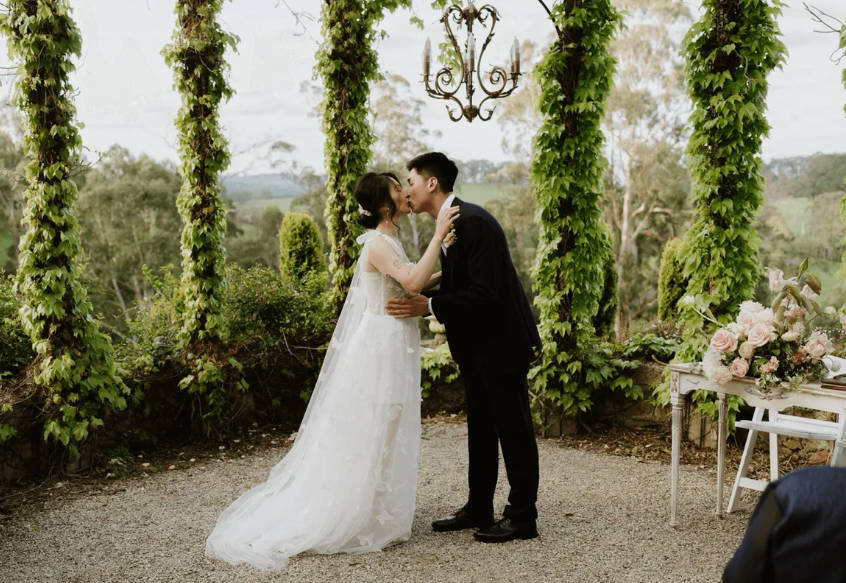
When the Wedding Was the First Time They Truly Spoke
Comments (12)
Jessica Miller
What a beautiful wedding! The rustic details are absolutely stunning. Congratulations to the happy couple!
David Thompson
Love the outdoor ceremony! The photos are gorgeous. Wishing Sarah and Michael a lifetime of happiness.