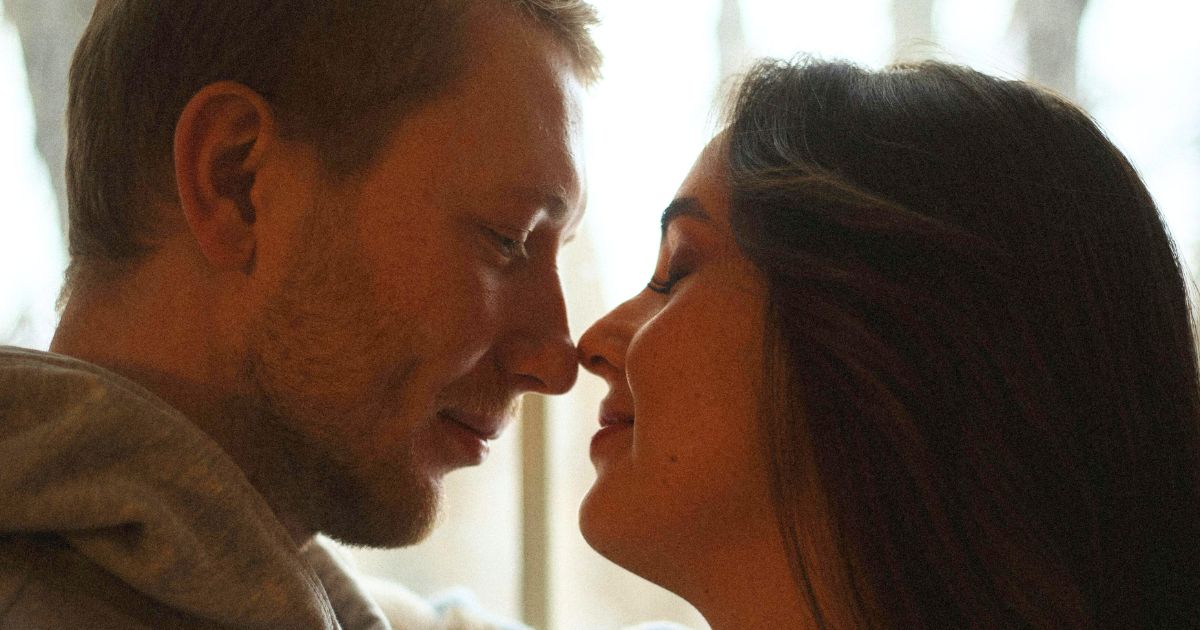
Liam and Rose did not describe themselves as private people. They were sociable, articulate, and comfortable in groups. What they resisted was performance. Their discomfort was not with being seen, but with being staged. Both had attended dozens of weddings where moments seemed designed less for the people present and more for the audience that would eventually view them online. They noticed how often couples disappeared emotionally behind schedules, shot lists, and the pressure to appear joyful on cue. When they began planning their own wedding, one question surfaced repeatedly: what would this day feel like if no one were watching later? The answer shaped every decision that followed. The most visible—and controversial—choice was the request for guests to put away their phones during the ceremony. Not permanently, not aggressively, but intentionally. A note in the invitation explained the reasoning clearly and without judgment. The couple asked for attention, not obedience. This request came with anxiety. Rose worried about appearing controlling. Liam worried about alienating guests who equated documentation with care. But both felt that if the ceremony was about presence, they had to protect it structurally. On the day itself, the effect was immediate and unmistakable. As guests entered the space, there was an unusual stillness. Without screens raised, people looked at one another. Conversations quieted naturally. The absence of devices created a subtle shift in posture and energy. When the ceremony began, eye contact replaced observation. Silence carried weight. Small sounds—the movement of fabric, a breath taken before a vow—became perceptible. From an experiential standpoint, this mattered deeply. Memory formation is affected by attention. When people divide focus between witnessing and recording, emotional encoding weakens. Here, attention was singular. Liam later described feeling "held" by the room rather than watched. Rose said she noticed faces rather than lenses. This distinction changed how they experienced their own vows. They were not performing sincerity; they were inhabiting it. The ceremony itself was brief and unadorned. There were no amplified readings, no elaborate transitions. The language was plain, intentional, and grounded in shared experience rather than abstraction. What surprised many guests was not the simplicity, but the emotional density. Several later said they felt unusually moved, though they could not immediately articulate why. The answer lies in contrast. In a culture saturated with documentation, restraint becomes striking. Quiet becomes audible. At the reception, phones were welcome again. Laughter returned. Photos were taken freely. But the tone had shifted. The day no longer felt like content production. It felt like participation. Guests interacted more with one another. Conversations deepened. There was less drifting, less scanning. The ceremony had recalibrated attention. From an analytical perspective, Liam and Rose’s wedding demonstrates a critical insight: intimacy requires protection. It does not emerge automatically from good intentions. It must be designed. Many couples attempt to preserve intimacy emotionally while surrendering it structurally. They say the day is about connection, then schedule it like a broadcast. The contradiction undermines the goal. Here, boundaries did not reduce warmth. They increased it. There were moments of discomfort. One guest admitted later that not being able to photograph the vows initially felt frustrating. But that frustration passed quickly, replaced by immersion. This points to an important truth: people often confuse access with participation. But witnessing fully requires less control, not more. The wedding did not reject technology wholesale. It simply placed it in its proper role. The couple acknowledged that some moments benefit from preservation. Others benefit from disappearance. As a storyteller who has observed countless ceremonies, I see this wedding as emblematic of a broader cultural tension. We want to remember everything, and in doing so, we often experience less. Liam and Rose chose memory over archive. Their decision was not nostalgic or anti-modern. It was deliberate and psychologically informed. They understood that meaning is not generated by visibility alone. In conclusion, this quiet wedding offers a powerful reminder: intimacy is fragile in public spaces. When couples take responsibility for protecting it, they give their guests a rare gift—the chance to be fully present. Liam and Rose did not lose anything by refusing constant documentation. They gained something increasingly scarce: a day that belonged entirely to those who were there.
The Quiet Wedding: Intimacy in an Age of Performance
Comments (12)
Jessica Miller
What a beautiful wedding! The rustic details are absolutely stunning. Congratulations to the happy couple!
David Thompson
Love the outdoor ceremony! The photos are gorgeous. Wishing Sarah and Michael a lifetime of happiness.