When Hannah and Oliver began planning their wedding, the question they refused to ask was also the one everyone else seemed most curious about: how do you marry again after loss? Hannah had lost her first husband, Daniel, to a long illness four years earlier. By the time she met Oliver, grief was no longer raw, but it was still present—integrated into daily life rather than resolved. She did not describe herself as "moving on." She described herself as learning how to live with memory. From the beginning, this distinction shaped the relationship. Oliver did not enter Hannah’s life as a replacement figure. He entered as a new presence, aware that love had existed before him and would continue to exist alongside him, albeit differently. This awareness required maturity from both sides. Early conversations were not romantic in the traditional sense. They were careful, explicit, and sometimes uncomfortable. What would memory look like inside a new marriage? What role would grief play on days meant to celebrate joy? Many couples avoid these questions. Hannah and Oliver did not have that luxury. When the decision to marry was made, it was grounded not in forgetting, but in capacity. Hannah felt ready not because her grief had ended, but because it had stabilized. Oliver felt ready because he understood that loving her meant loving a life shaped by loss. Wedding planning brought these dynamics into focus. Well-meaning friends suggested symbolic closures—lighting candles, releasing balloons, formal acknowledgments meant to "honor the past." Each suggestion felt wrong. From an experiential standpoint, symbolic gestures often externalize what is already internal. For Hannah, grief did not require ceremony. It required space. The couple chose restraint. The ceremony would not revolve around absence, but it would not erase it either. The solution was subtle. In the officiant’s opening words, there was a brief acknowledgment of love in all its forms—past, present, and future. No names were spoken. No attention was drawn. The line passed quietly, but those who needed to hear it did. This choice was deliberate. Public grief can quickly become performative. Private grief, when respected, remains intact. As someone who has observed weddings after loss, I can say with confidence that denial creates tension, while integration creates calm. The rest of the ceremony focused on presence. The vows were grounded, almost spare. Hannah did not promise eternal happiness. She promised honesty, patience, and the courage to remain emotionally available even when fear resurfaced. Oliver’s vows reflected a different kind of bravery. He promised not to compete with memory. He promised to listen without defensiveness, and to understand that grief is not a threat to love, but evidence of it. The atmosphere in the room was unusual. Not heavy, not sentimental—but attentive. Guests listened differently. Silence felt intentional rather than awkward. Several attendees later described the ceremony as "steady." Not dramatic. Not overwhelming. Simply steady. At the reception, conversations took unexpected turns. People spoke about resilience, about timing, about how love changes rather than repeats. The usual small talk gave way to quieter exchanges. This is one of the overlooked impacts of emotionally honest weddings: they invite honesty from others. Hannah later shared that this was the first major life event since her loss where she did not feel fragmented. She did not feel pulled between who she had been and who she was becoming. The day allowed both identities to coexist. From an analytical perspective, remarriage after loss often fails emotionally when couples attempt to simplify the narrative. Complexity does not weaken commitment—it clarifies it. Oliver’s role was not to rescue Hannah from grief. It was to walk beside her without demanding resolution. Their wedding reflected this ethic throughout. There was no forced cheerfulness, no avoidance of quiet moments. The pacing allowed breath. Importantly, the day did not revolve around grief. It simply made room for it. This distinction preserved joy rather than diminishing it. As the evening ended, Hannah described feeling something she had not expected: not closure, but continuity. Her life did not divide cleanly into before and after. It layered. In conclusion, Hannah and Oliver’s wedding offers a rare and necessary model for remarriage after loss. Love does not require exclusivity to be sincere. It requires honesty. Their story challenges the cultural pressure to replace rather than integrate, to move on rather than move forward. This wedding did not erase a past love. It honored it by refusing to compete with it. And in doing so, it created space for a future built not on denial, but on trust.
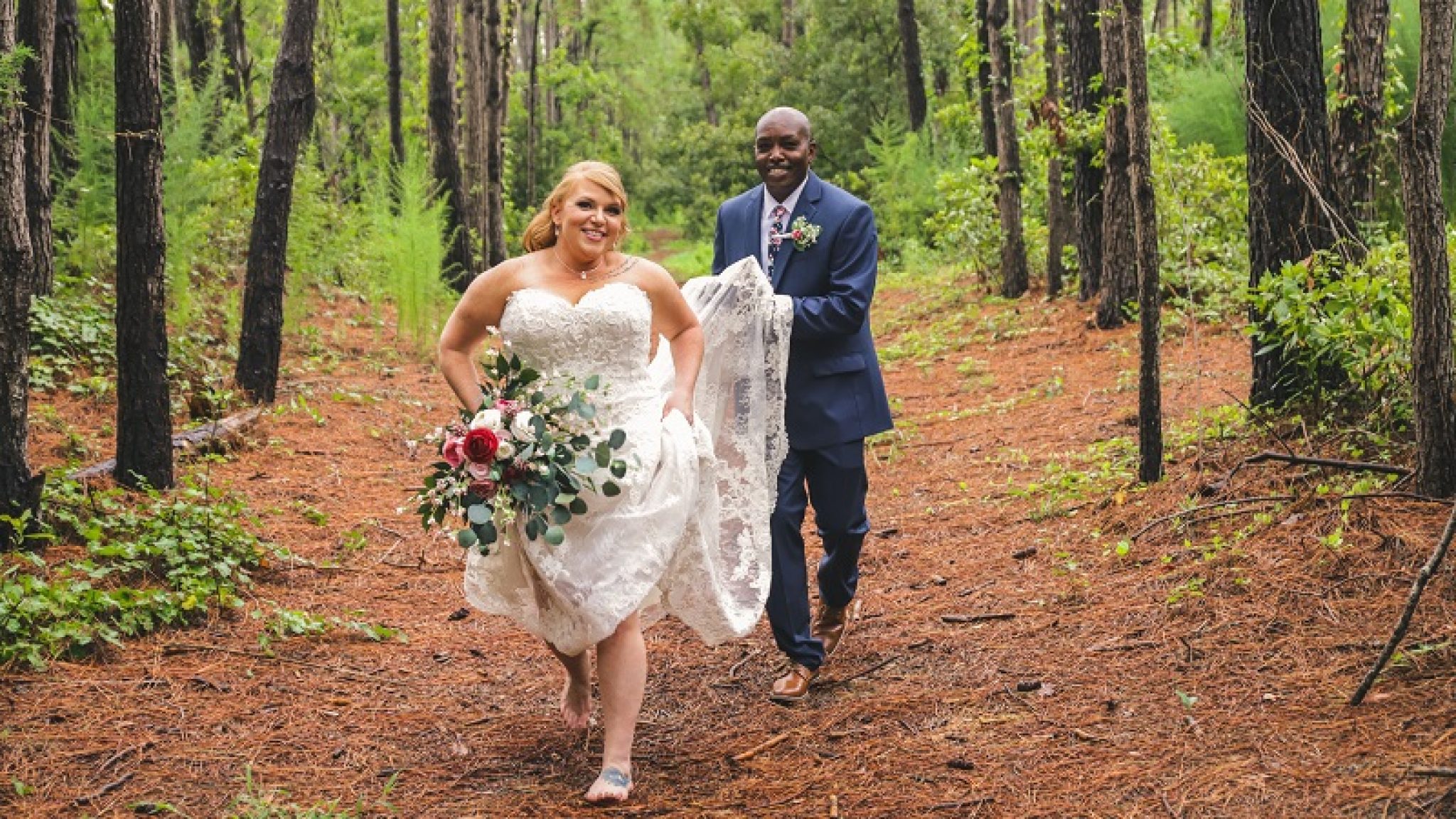
Marrying After Loss: When Love Is Not a Replacement
Comments (12)
Jessica Miller
What a beautiful wedding! The rustic details are absolutely stunning. Congratulations to the happy couple!
David Thompson
Love the outdoor ceremony! The photos are gorgeous. Wishing Sarah and Michael a lifetime of happiness.