Mina and Jakob’s wedding was never going to be simple. Not because of logistics, but because language itself carried emotional weight. With three languages spoken across their families and guests, the challenge was not how to translate words—but how to translate meaning. I have attended many cross-cultural weddings as an observer and documentarian, and one recurring failure stands out: when translation is treated as a technical necessity rather than an emotional responsibility. Mina and Jakob were determined not to let that happen. Their ceremony was intentionally slow. Vows were not merely repeated in different languages; they were reshaped. Certain expressions were adapted, not because the original phrasing was insufficient, but because emotional resonance does not travel intact across cultures. A literal translation can preserve syntax while losing soul. At one moment, Jakob spoke in German about partnership as shared endurance. When Mina translated into Mandarin, she changed the metaphor entirely, choosing an image rooted in seasonal persistence rather than linear struggle. Later, when English was used as a bridge language, the phrasing shifted again—simpler, less poetic, but more inclusive. What struck me was not the linguistic dexterity, but the emotional attentiveness. Each version acknowledged that different audiences carry different emotional frameworks. No one language was privileged as the ‘real’ one. This approach required labor—emotional labor. It required slowing the ceremony, explaining rituals without condescension, and accepting that clarity mattered more than aesthetic pacing. Music alternated between cultures. Rituals were introduced briefly, with context, not performance. Guests responded visibly. Confusion softened into engagement. People leaned forward instead of checking programs. Emotional distance dissolved not through spectacle, but through understanding. The reception continued this philosophy. Seating was intentionally mixed to prevent cultural clustering. Food choices prioritized familiarity over novelty, allowing guests to feel grounded rather than performative. From an analytical standpoint, this wedding succeeded because inclusion was designed structurally, not symbolically. Emotional access was planned, not assumed. My conclusion, grounded in repeated observation, is clear: multicultural weddings fail when they prioritize visual cohesion over emotional comprehension. Mina and Jakob reversed that hierarchy. In doing so, they demonstrated something rare—that translation, when handled with care, becomes an act of respect. Their ceremony did not dilute culture. It deepened connection. This wedding remains one of the clearest examples I have witnessed of how emotional labor, when acknowledged rather than hidden, becomes the foundation of trust and shared meaning.
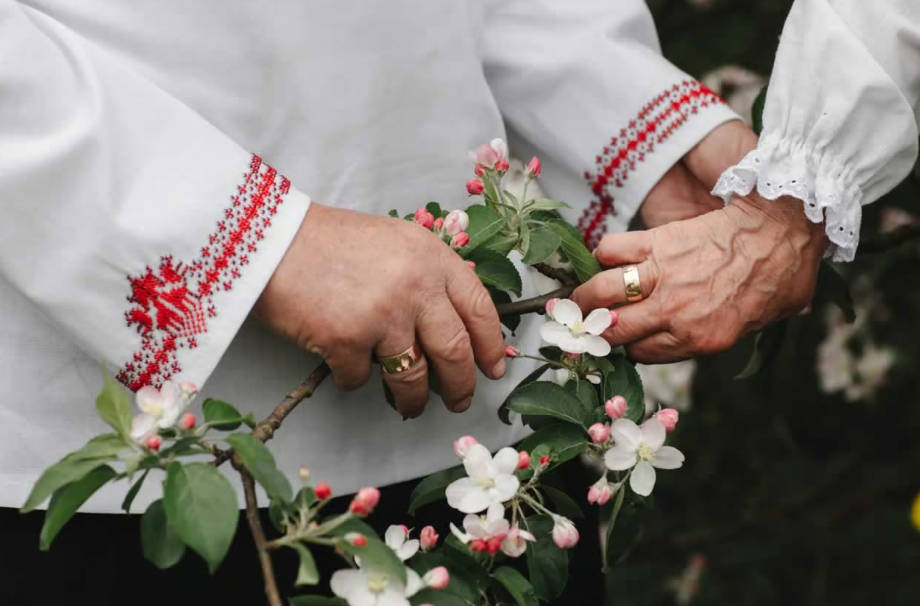
Cross-Cultural Vows: When Translation Becomes Emotional Labor

Comments (12)
Jessica Miller
What a beautiful wedding! The rustic details are absolutely stunning. Congratulations to the happy couple!
David Thompson
Love the outdoor ceremony! The photos are gorgeous. Wishing Sarah and Michael a lifetime of happiness.